


Somewhere between the first crate of the morning and the last scraped bin, a market tells you exactly what month it is. The tomatoes that tasted of almost nothing in February turn sweet and cheap by August. The asparagus that cost a fortune in the first week of April settles into something you can buy by the bundle three weeks later. Shopping with that rhythm instead of against it is the simplest way to eat better and spend less — not because there is a secret, but because you stop paying for produce that travelled a long way to disappoint you.
This calendar assumes a temperate northern market, so treat the months as a shape rather than a rule. A cold spring pushes everything back a fortnight; a warm one pulls it forward. Your own stall is the final authority.
How a Market Year Actually Breathes
A season does not switch on at the turn of a page. It rolls. A few crates of something appear, then a pallet, then a whole wall of it, then it thins out again. Watch that curve for a couple of months and two markers become obvious: the first arrival and the glut week.
The first arrival is the expensive one. Buy a small amount, partly out of curiosity and partly to reward the grower who pushed it along, but it is rarely the best value on the stall. The glut week is the opposite — the same produce at its sweetest and cheapest, with vendors practically pressing it on you because there is more of it than the neighbourhood can eat.
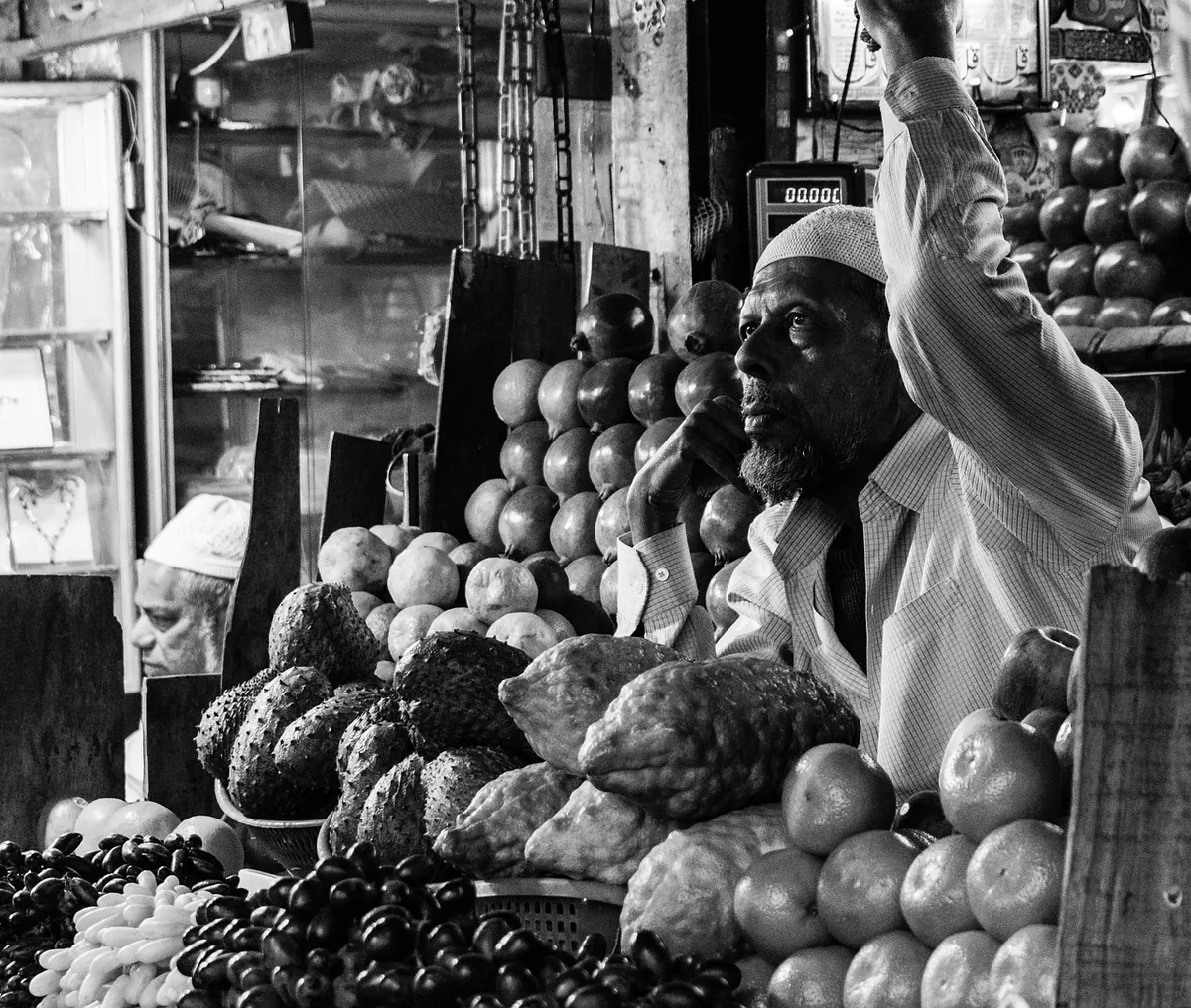
Seasonal and local are related but not identical. A good stall can hold apples, potatoes and onions in decent condition for months; that is storage, not deception. What you lose is flavour and texture, not safety. Still, it pays to ask. Vendors who grow their own are usually pleased to talk, and the ones who buy at wholesale will tell you plainly enough if you ask without an edge in your voice.
- Where was this grown, and did you bring it in yourself?
- Is this the first of the season or the middle of it?
- Will there be more next week, and will it be better?
- What are you cooking with it at home?
- Out of these two, which would you take?
- Is there anything on the stall that is particularly good today?
That last question is worth more than any app. It costs nothing, it flatters nobody, and it regularly sends you home with something you would never have chosen alone.
January to March: The Quiet, Dependable Months
Winter is when a market becomes honest. The stalls shrink, the colours narrow to orange, green and earth, and the prices on the boring things drop to where they should be. This is citrus at its peak in Mediterranean markets — oranges, mandarins, lemons, with thin skins and heavy flesh — alongside roots and brassicas: carrots, parsnips, celeriac, beetroot, turnips, leeks, cabbage, kale, cauliflower, purple sprouting broccoli. Cardoons, radicchio, puntarelle and cavolo nero carry Italian winter stalls, and the first forced rhubarb shows up in the colder regions before spring properly arrives.
The trap of the season is the expensive import. Pale strawberries and hard, waterlogged tomatoes sit near the till looking like a promise and tasting like nothing. Buy roots and greens instead, roast them hard, and put the saved money towards the spring.
Buying cues are simple. Cabbage should feel heavy for its size with tight, crisp leaves. Roots should be firm, with no soft shoulders or shrivelled crowns. Citrus should feel dense in the hand — a light lemon is a dry lemon. Skip anything bendy, wrinkled or sitting in its own damp.
April to June: The Handover Season
This is the most awkward stretch of the market year. The stored roots are running out, the new crops are not ready, and the gap between the two is filled with whatever the weather allows. Expect uneven quality and prices that jump around. Be flexible rather than loyal to a list.
What arrives is worth waiting for: asparagus, artichokes, radishes, spring onions, lettuces, spinach, wild garlic, then peas, broad beans, new potatoes and the first strawberries and cherries. Asparagus should be firm, with closed tips and a faint squeak when you rub two spears together. Peas and broad beans in the pod should feel full and heavy, and you should buy more than you think — the pods are most of the weight. Strawberries are a smell test before a look test: if the crate has no scent, the fruit will not have any either.
Early tomatoes appear in late spring and are almost always a mistake. Wait. The same money buys something entirely different in six weeks.
July and August: Peak Abundance
This is the stretch to shop hard. Tomatoes, peppers, aubergines, cucumbers, courgettes, green beans, sweetcorn, peaches, apricots, nectarines, melons, basil and, late in the season, the first figs. Everything on the stall wants to be eaten now, and prices are as low as they will go, because every grower in the region is picking at once.
Buy a box, not a punnet. Share it, freeze it, roast a tray of tomatoes down into sauce, or make jam from fruit that is a day past its best. The freezer is how you keep buying at peak prices through a month when nothing is at its peak.
How to buy in the heat
Shop early, before the sun has spent four hours on the crates, and take a cool bag if you have a long journey home. Choose tomatoes that smell of tomato and feel heavy; they should be sold at room temperature, never chilled, and should never be stacked more than two deep or they will bruise. Peaches and apricots should give slightly at the stem end, not at the shoulder. Sweetcorn wants tight green husks and kernels that spurt a milky drop when you press one with a thumbnail.
September and October: The Best Value of the Year
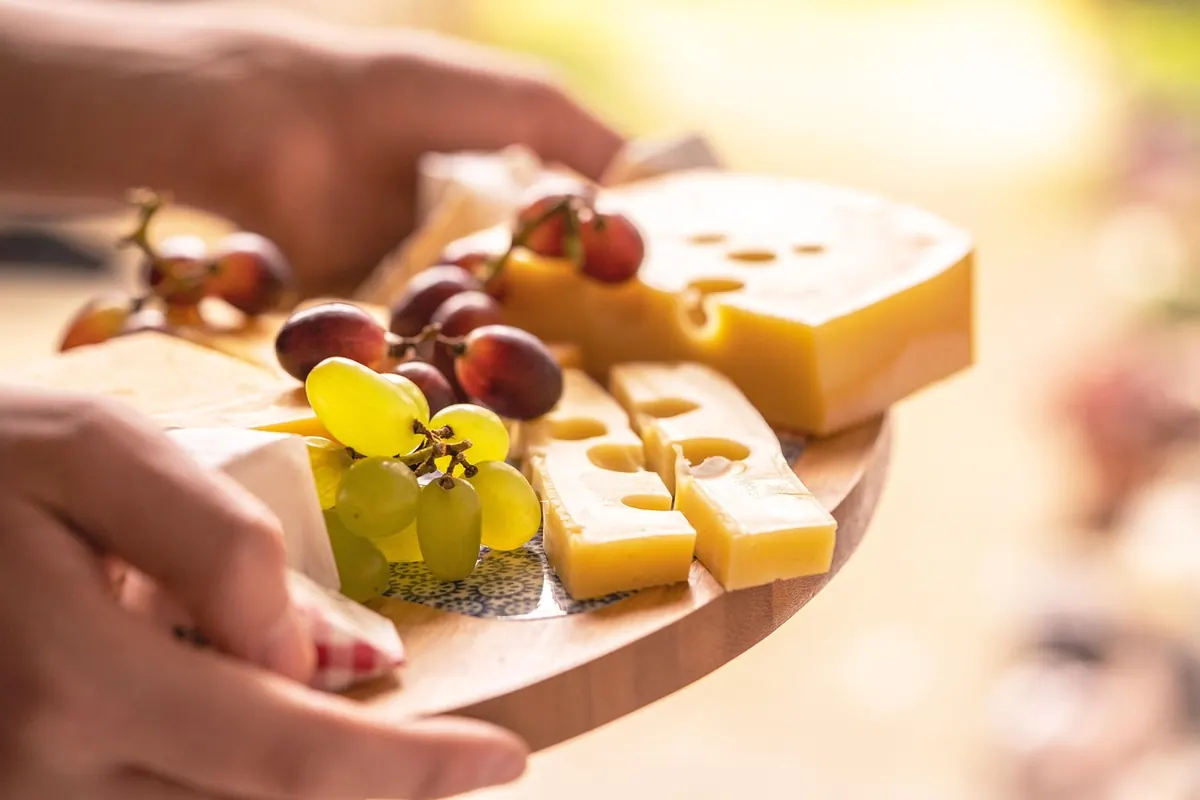
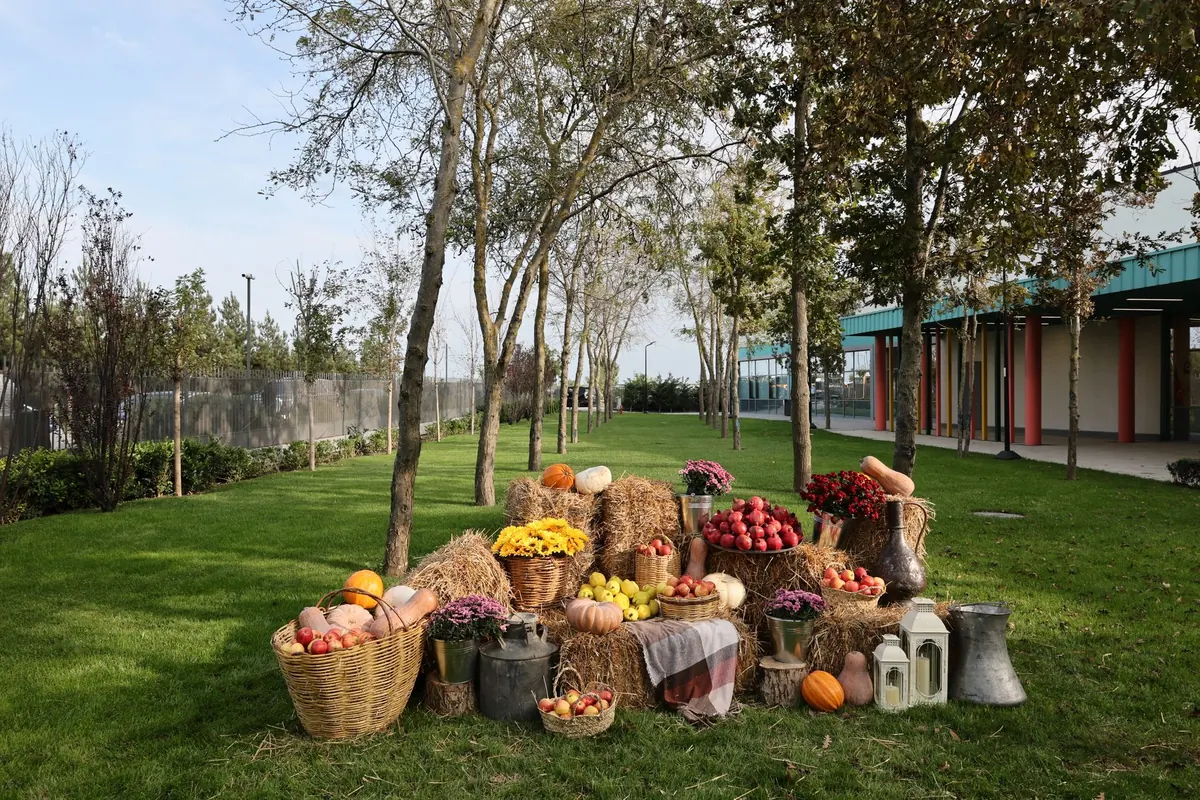
Autumn is the season shoppers underestimate. Figs, grapes, apples, pears, quince, pumpkins and squash arrive while the summer vegetables are still going, so the market is unusually generous for a few weeks. Mushrooms begin in earnest — porcini, chanterelles, field mushrooms — and chestnuts and walnuts follow. Late tomatoes, slightly softer and cheaper, are exactly the ones for sauce.
Apples deserve more attention than they get. Ask which varieties are for eating raw and which are for cooking, ask which are new-season and which have been in store, and try something you have never heard of. Older local varieties are often cheaper than the uniform fruit in supermarkets and considerably better flavoured.
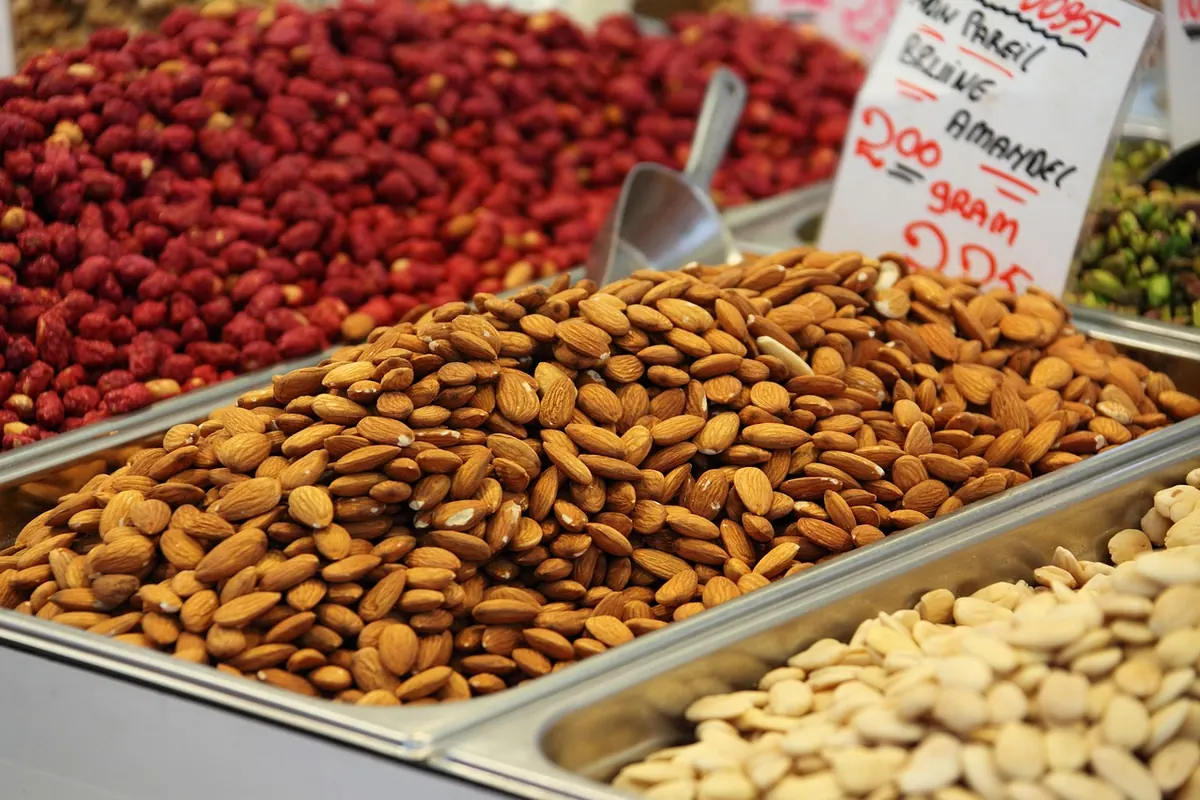
For mushrooms, buy firm, dry specimens that smell of forest rather than ammonia, and brush them clean at home instead of soaking them. For nuts, buy small quantities often; a large bag that sits in a warm cupboard turns rancid before you finish it.
November and December: Roots, Nuts and the Holiday Rush
The market turns inward again. Roots, brassicas, leeks and squash return, joined by citrus from the south, pomegranates, persimmons, chestnuts and dried fruit. This is a comfortable, cheap way to eat, and the first clementines of the year are one of the better small pleasures of the calendar.
What changes is the crowd. In the weeks before the holidays, stalls get busy, vendors get rushed, and the temptation is to do everything in one enormous Saturday trip. Don't. Buy early in the day, order large cuts in advance rather than hoping, and spread the shopping over two or three visits so you can still ask questions and still get a good pick. The week between the holidays and the new year is often quiet and calm, with produce at its most affordable.
Build Your Own Buying Rhythm
Every region has its own version of this calendar, and the only one that matters is the one on your stall. Keep it simple and keep it written down.
- Start a single page in a notebook: month, what appeared, what was good, what was disappointing.
- Note the week each crop got both cheaper and better. That is your buy signal for next year.
- Plan meals around what is running out at the end of the day, then shop the rest of the list around it.
- Pick one vendor and ask, every visit, what is best that day.
- Buy a little extra at peak, and freeze or preserve it for the months when the same money buys half as much.
Prices wobble for reasons that have nothing to do with you — a wet week somewhere, a thin harvest, a delivery that did not arrive. Ask about it rather than assuming the worst, and if a price stays high for weeks, spend your money elsewhere on the stall. That, more than any rule about seasons, is what keeps a market honest and a shopping basket good.
Photo: Tahir Xəlfəquliyev / Pexels