


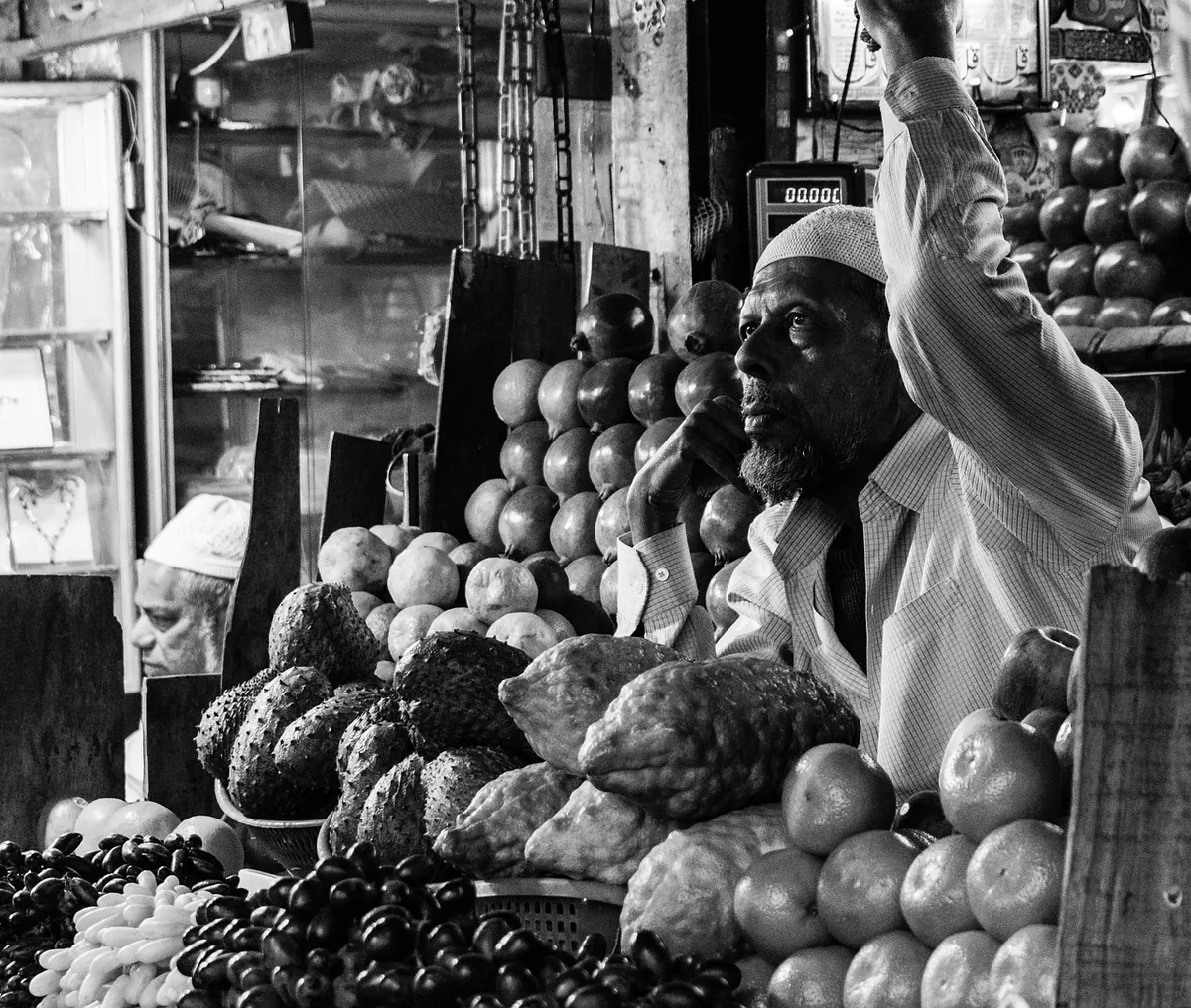
The crates arrive before the light does. By the time the side doors of the covered market are unlocked, Elena Marchetti has opened three boxes, run a thumb along the skin of a peach, and pushed one crate to the back of the stall where customers will not see it. She has stood on this pitch for nineteen years. Her father stood here for thirty-one before that, and her grandfather sold from a barrow in the square when the market still had no roof.
We talked across a slow morning, the kind with rain in the forecast and too many people deciding to stay home. The conversation kept breaking off for customers, which is how any real conversation with a market trader goes. What follows has been trimmed and ordered, but the interruptions were part of the point.
The week has a shape, and so does the day
“People think it’s one crowd,” she says. “It’s five crowds, and they arrive on a schedule.”
Between half past six and eight come the ones on their way to work: nurses finishing a night shift, builders who want something they can eat in the van, a man who buys exactly four apples every Tuesday and has never once asked what they cost. Then the parents doing a fast pass before school. Late morning belongs to older customers who want to talk and to the woman who buys one soft pear twice a week for her mother in a care home. Lunch is quick and impatient. The last hour is for people who come to see what is left and what has been marked down.
Weekends are a different trade entirely. Families, visitors, people who cook properly on a Sunday and want to be told what to do with it. “Saturday I sell far more herbs and far less of everything else. Sunday I could almost close. Monday I spend the whole morning resetting.”
That rhythm is not sentiment. It is stock control. She orders for Tuesday on Sunday night, and she orders for Saturday on Wednesday. A trader who ignores the shape of the week either runs out by eleven or throws money into the bin at seven in the evening.
The baskets got smaller before the questions got harder
The most visible change of the past decade is volume. The weekly shop that used to fill two bags now arrives as three smaller visits. More single households, more people working from home part of the week, more walkers who can only carry so much. “I sell a lot more halves and quarters than I used to. Half a cabbage, three carrots, a punnet instead of a box.”
The second change is that people ask more. Where is this from, when was it picked, will it last until Thursday, is there a sweeter one. Some of it is curiosity and some of it is thrift, and she treats both the same way: honestly, because a stall that oversells a bad batch pays for it twice.
The third change is harder to name and she circles it for a while. People still care about quality; they have less patience for preparation. A punnet of strawberries disappears in an afternoon. A bag of broad beans waits until it goes soft, because nobody wants to sit and pod them after work. “I can sell you the best beans in the market, but if you’re too tired to shell them at nine at night, I’ve sold you nothing. So I tell people the truth about the work involved.”
The competition isn’t only the supermarket
She does not spend much energy worrying about the discounter at the edge of town.
“I can’t beat them on price and I stopped trying. If your whole decision is the number on the label, you’re not my customer and that’s fine.” What worries her is not a rival shop but a lost habit — the delivery order placed at eleven at night, the corner shop that now sells decent fruit, the fact that a household can get through a week without ever standing in front of a person and choosing.
So the stall sells things a screen cannot. Someone to pick the melon for you and tell you it is ready tonight, not Friday. A taste before you buy. The chance to take two peaches rather than a sealed pack of six. A short answer to “what do I do with this?” that is worth more than a recipe card. “Convenience I lose. Advice I win. Small quantities I win. Nobody wants to be told they chose badly, and a good trader never lets them.”
Choosing what to buy is most of the job
Customers see the selling. The buying happens in the dark and decides everything. Her rules, roughly in the order she applies them:
- Weather first. Rain changes the footfall more than any promotion. Heat changes what people want to eat.
- Day of the week. Never buy Saturday stock on a Tuesday.
- What actually sold last week, not what she hoped would sell. The difference between the two is where money goes missing.
- The supplier’s morning, not the supplier’s brochure. Open the box. Taste it. Reject it while the van is still there.
- How long it will hold. A fruit with three days in it is worth more than a cheaper fruit with one.
- What she can talk about. If she cannot describe how to use it, she buys less of it.
“I would rather sell out at two and go home than have a full stall at seven. A full stall at closing time looks like abundance and feels like a mistake.”
What keeps a stall alive
Not generosity, and not charm. Reliability, mostly.
“People don’t come back because you were lovely once. They come back because the box was good three weeks running and you told them when it wasn’t.”
She is blunt with customers about a poor delivery, and she has found that it buys more loyalty than any discount. A trader who admits a bad batch is trusted on the good ones. She lets children choose a piece of fruit and does not charge for it; those children come back at twenty-five with their own shopping bags. She remembers names, not to perform friendliness but because it is faster: the man who wants firm pears, the woman who cannot eat anything too acidic, the household that needs everything to last until Friday.
And she shows up. Every market day, in the cold, with the shutters up at the same time. “Half of this job is being findable. There are stalls that are better than mine for two months a year and gone for the rest. That’s not a business, that’s a season.”
If you want your local stall to be there in ten years
Market trading rewards small, repeated gestures more than grand loyalty. A few things that genuinely help:
- Buy something small regularly rather than a large shop occasionally. Frequency is what a stall survives on.
- Ask what is good that day. It tells the trader what to stock and gets you a better bag.
- Say so when something was disappointing. Quietly, the next time. It is more useful than never returning.
- Ask for the amount you will actually eat. Half a kilo is a perfectly good order.
- Shop in the quiet hours if you want advice, and in the busy ones if you already know what you want.
- Do not haggle over good produce. Ask for a smaller quantity instead; it is the same saving with less resentment.
None of that is nostalgia. It is the ordinary machinery by which a stall stays open — a person who orders well, a customer who comes back on a Tuesday, and a conversation that lasts long enough to be useful.
Photo: balajisrinivasan / Pixabay